
Audi Q6 e-tron motors
The Audi Q6 e-tron uses a rear permanent-magnet motor, adding a front asynchronous motor in quattro variants.
The Q6 e-tron uses the modular electric drive system developed for the Premium Platform Electric (PPE). Rear-wheel-drive variants use a permanent-magnet synchronous motor (PSM) on the rear axle. Quattro variants add an asynchronous motor (ASM) on the front axle; it can rotate with very low drag when additional traction or power is not required.
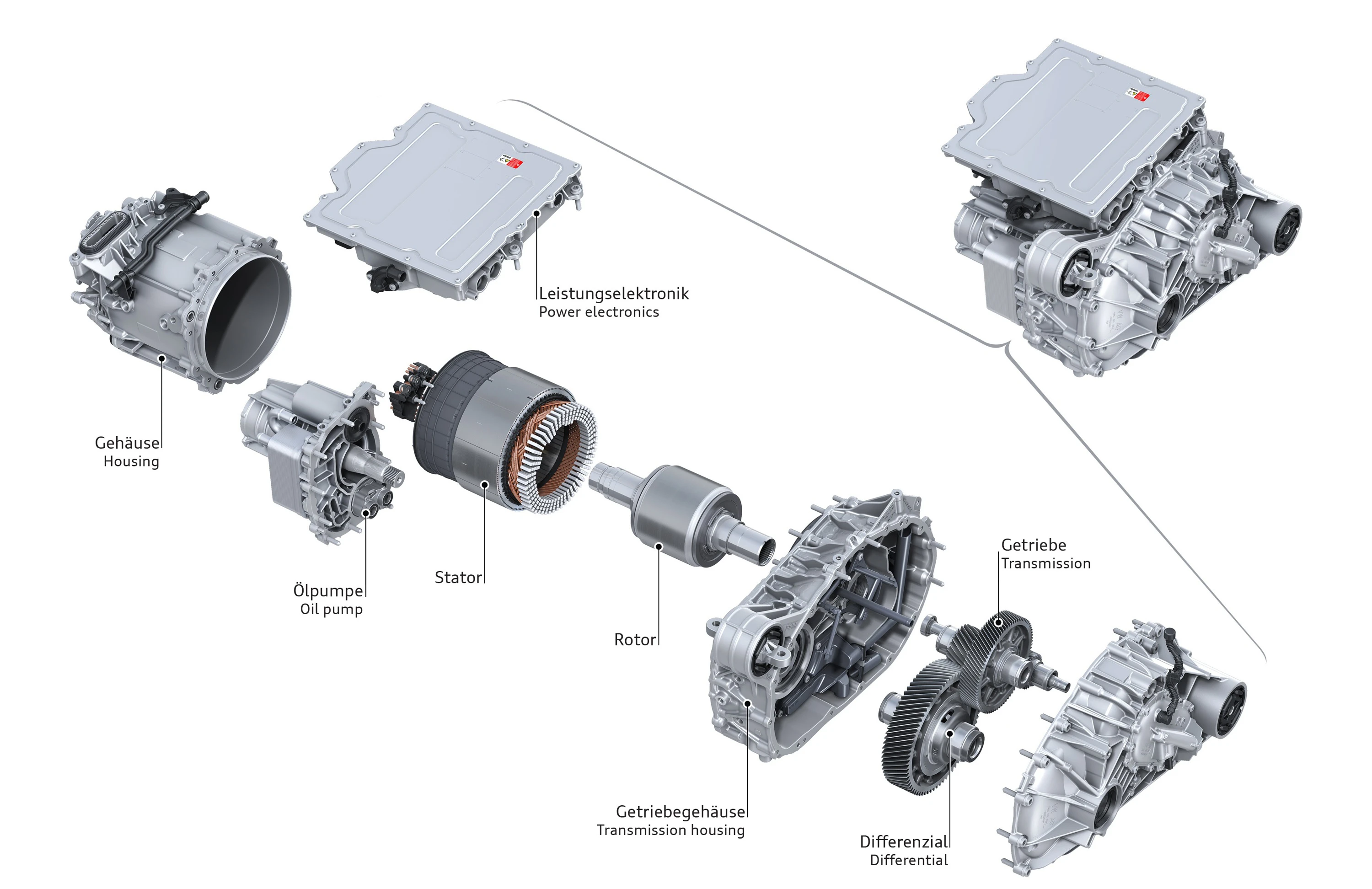
Audi Q6 e-tron asynchronous front motor
Motor configurations
| Drivetrain | Rear motor | Front motor | System output |
|---|---|---|---|
| Q6 e-tron | PSM | — | 185 kW, 215 kW with Launch Control |
| Q6 e-tron performance | PSM | — | 225 kW, 240 kW with Launch Control |
| Q6 e-tron quattro | PSM | ASM | 285 kW |
| SQ6 e-tron | PSM | ASM | 360 kW, up to 380 kW with Launch Control |
The same motor families are used in the SUV and Sportback. Exact peak output can vary by market and model year. The motors and a large proportion of their transmissions are produced by Audi Hungaria in Győr.
Efficiency
The PPE drive units combine the motor, pulse inverter and single-speed transmission in a compact module. Compared with Audi’s first-generation electric drive units, Audi states that the PPE design requires around 30 percent less installation space, weighs about 20 percent less and reduces drive losses by roughly 50 percent.
Hairpin windings increase the stator fill factor, while direct oil cooling keeps the stator and rotor magnets within their intended temperature range. The pulse inverter uses silicon-carbide semiconductors to reduce electrical losses, particularly under partial load.
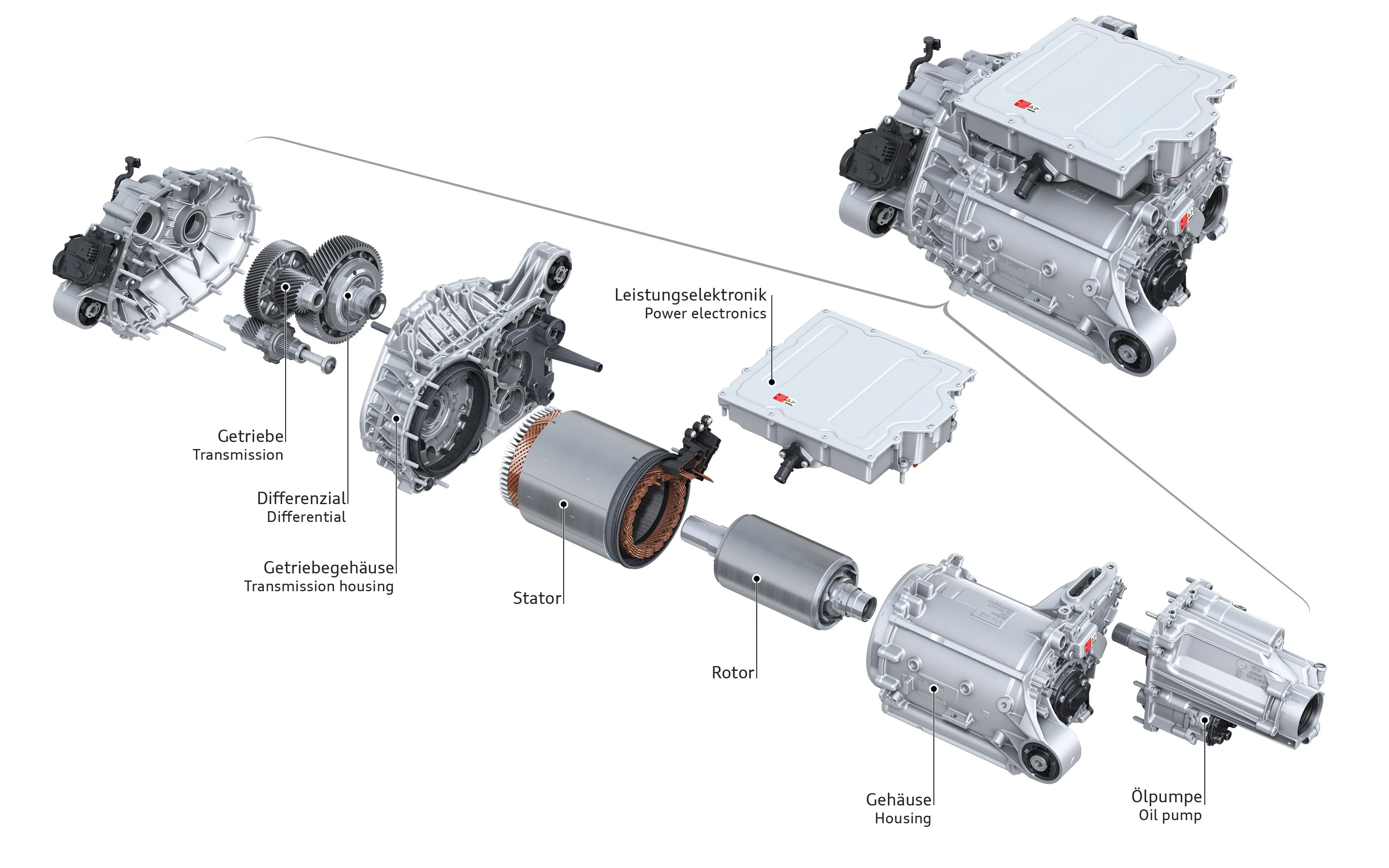
Audi Q6 e-tron permanent-magnet rear motor
The 800-volt system permits smaller cable cross-sections than a comparable lower-voltage design and helps reduce weight and heat losses. The rear motor remains the primary drive unit even in quattro variants, giving the all-wheel-drive system a rear-biased character.