
Battery system
The battery system is the combination of many cells and other control electronics to a complete battery to power the EV.
Today this is most commonly achieved with cell-to-module construction: cells are grouped into modules, which are then assembled into a battery pack.
Cell-to-pack construction removes conventional modules and integrates cells directly into the pack. Cell-to-body designs go a step further by making the battery structure part of the vehicle body.
A typical battery pack consists of modules containing several cells.
Modules
Modules are a combination of cells. The number of cells in a module varies.
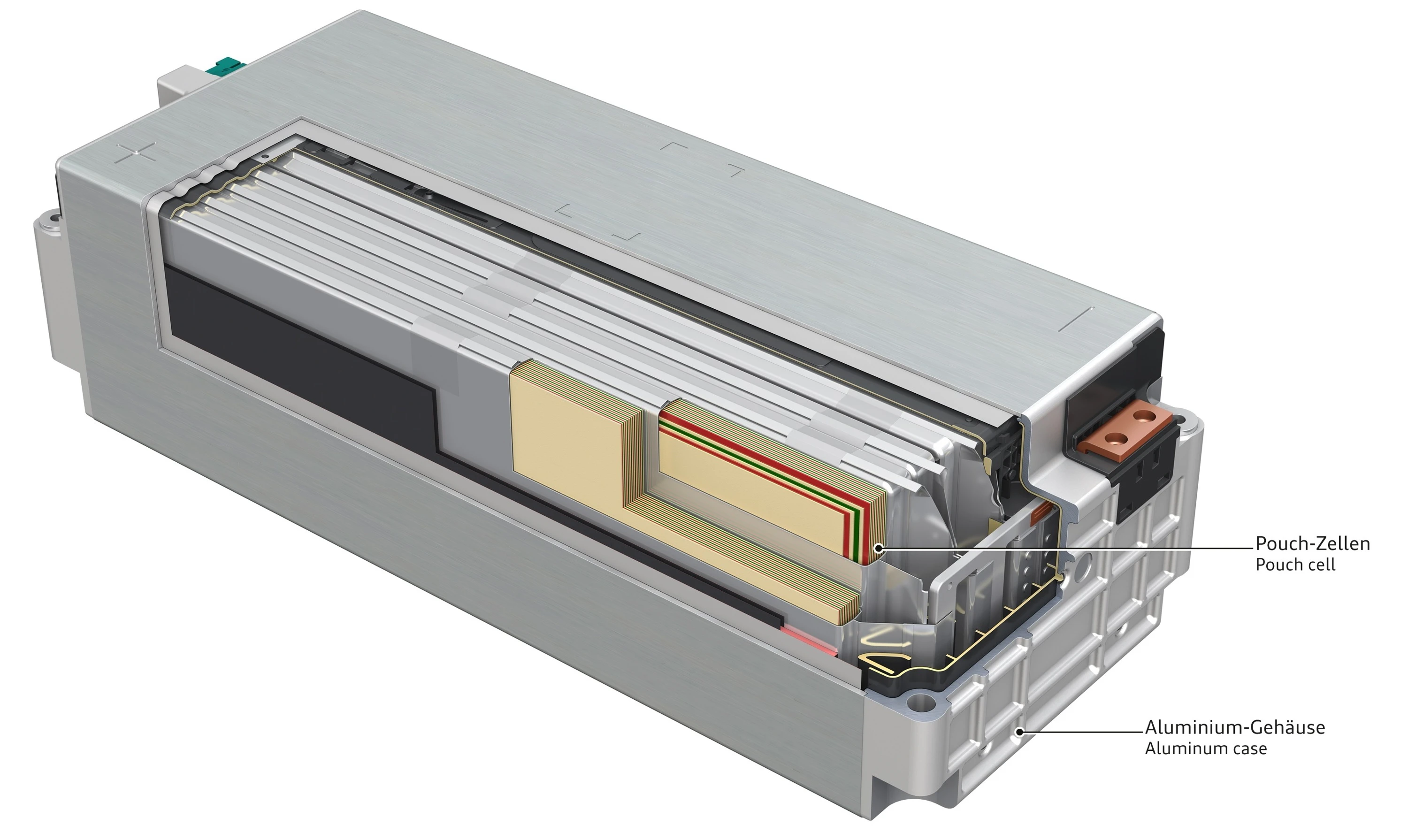
LG battery module
Architecture
The cells inside a module can be connected in different ways.
- Serial connecting gives a higher voltage
- Parallel connection gives a higher capacity.
Example 1
Below you see how modules on the Audi e-tron 55 are. There are 12 cells per module. They are grouped into 3 groups where 4 cells are connected in parallel. Then those groups are connected in serial giving it a 3 serial 4 parallel configuration (3s4p). With 60AH for each cell and a nominal voltage of 3.66 volts, this module has a capacity of 240AH and 11 volts.

Example 2
Below you see how modules on the Audi e-tron 50 are. There are 12 cells per module. They are grouped into 4 groups where 2 cells are connected in parallel. Then those groups are connected in serial giving it a 4 serial 2 parallel configuration (3s4p). With 60AH for each cell and a nominal voltage of 3.66 volts, this module has a capacity of 180AH and 14.666 volts.

Audi modules
| Module | No of cells | Config | Capacity AH | Nominal voltage | kWh | |—–|—–|—–|——|——| |e-tron 55 | 12 | 3s4p | 240AH | 11 volts | 2.640 kWh | |e-tron 50 | 12 | 4s3p | 180AH | 14.666 volts | 2.640 kWh | |e-tron GT | 12 | 6s2p | 129.2AH | 21.909 volts | 2.830kWh | |Q4 e-tron | 24 | 8s3p | 234AH | 29.16 volts | 6.825kWh |
Packs
Battery packs consist of several modules placed in a construction that is created to protect them and give them optimal conditions. Below you see a battery pack from Audi e-tron GT.

Battery pack with 33 modules
Typical the pack is placed at bottom of the car.
Audi Battery packs
Today all Audi models use Cell2Module technology
Battery pack configuration
| Cell type | Cells | Modules | Voltage | Cell config | Gross cap | |
|---|---|---|---|---|---|---|
| e-tron 55 | LGXN2.1 | 432 | 36 | 396 | 108s4p | 95 kWh |
| e-tron 55*3 | Samsung | 432 | 36 | 396 | 108s4p | 95 kWh |
| e-tron 50 | Samsung | 324 | 27 | 396 | 108s3p | 71 kWh |
| e-tron GT | E66A | 396 | 33 | 723 | 196s2p | 93.4 kWh |
| RS e-tron GT | E66A | 396 | 33 | 723 | 196s2p | 93.4kWh |
| Q4 e-tron 50 | LGX E78 | 288 | 12 | 350 | 96s3p | 82 kWh |
| Q4 e-tron 40 | LGX E78 | 288 | 12 | 350 | 96s3p | 82 kWh |
| Q4 e-tron 35 | LGX E78 | 196 | 9 | 350 | 96s2p | 55 kWh |
| Q6 e-tron*1 | LGX E78? | 392? | 16? | 700? | 192s2p? | 110 kWh? |
| A6 e-tron *2 | LGX E78? | 392? | 16? | 700? | 192s2p? | 110 kWh? |
Battery pack performance
In the table below you see the pack performance. See how Q4 has a higher density even the cell itself does not have a better density.
| Gross capacity | Net capacity | Max DC Charging | Weight | kWh/kg | |
|---|---|---|---|---|---|
| e-tron 55 | 95kWh | 86.5kWh | 150kW | 699kg | 0.136 |
| e-tron 55*3 | 95kWh | 86.5kWh | 150kW | 699kg | 0.136 |
| e-tron 50 | 71kWh | 64.7kWh | 125kW | 580 | 0.122 |
| e-tron GT | 93.4kWh | 83.7kWh | 270kW | 630kg | 0.148 |
| RS e-tron GT | 93.4kWh | 83.7kWh | 270kW | 630kg | 0.148 |
| Q4 e-tron 50 | 82kWh | 77kWh | 125kW | 493kg | 0.188 |
| Q4 e-tron 40 | 82kWh | 77kWh | 125kW | 493kg | 0.188 |
| Q4 e-tron 35 | 55kWh | 52kWh | 100kW | 344kg | 0.160 |
| Q8 50 e-tron | 95kWh | 89kWh | 150kW | 699kg | 0.136 |
| Q8 55 e-tron / SQ8 | 114kWh | 104Wh | 170kW | 727kg | 0.157 |
*1 Audi Q6 details are not yet confirmed.
*2 Audi A6 details are not yet confirmed.
*3 From January 2021 Audi uses Samsung cells on e-tron 55
What is next for Audi?
The problem with today’s approach with Cell2Modules is that the energy density on the battery system is much lower than on the cell level. This is because of all the structural elements in a battery that does not add any energy content to a battery pack.
Cell-to-pack construction can reduce inactive structural material by placing cells directly into the pack rather than into separate modules. This can improve pack-level energy density and reduce weight, but the implementation and benefits vary between manufacturers and battery designs.
On March 15, 2021, Volkswagen Group presented its battery strategy at Power Day. The following material reflects that 2021 strategy and should not be read as a current Audi model launch schedule.
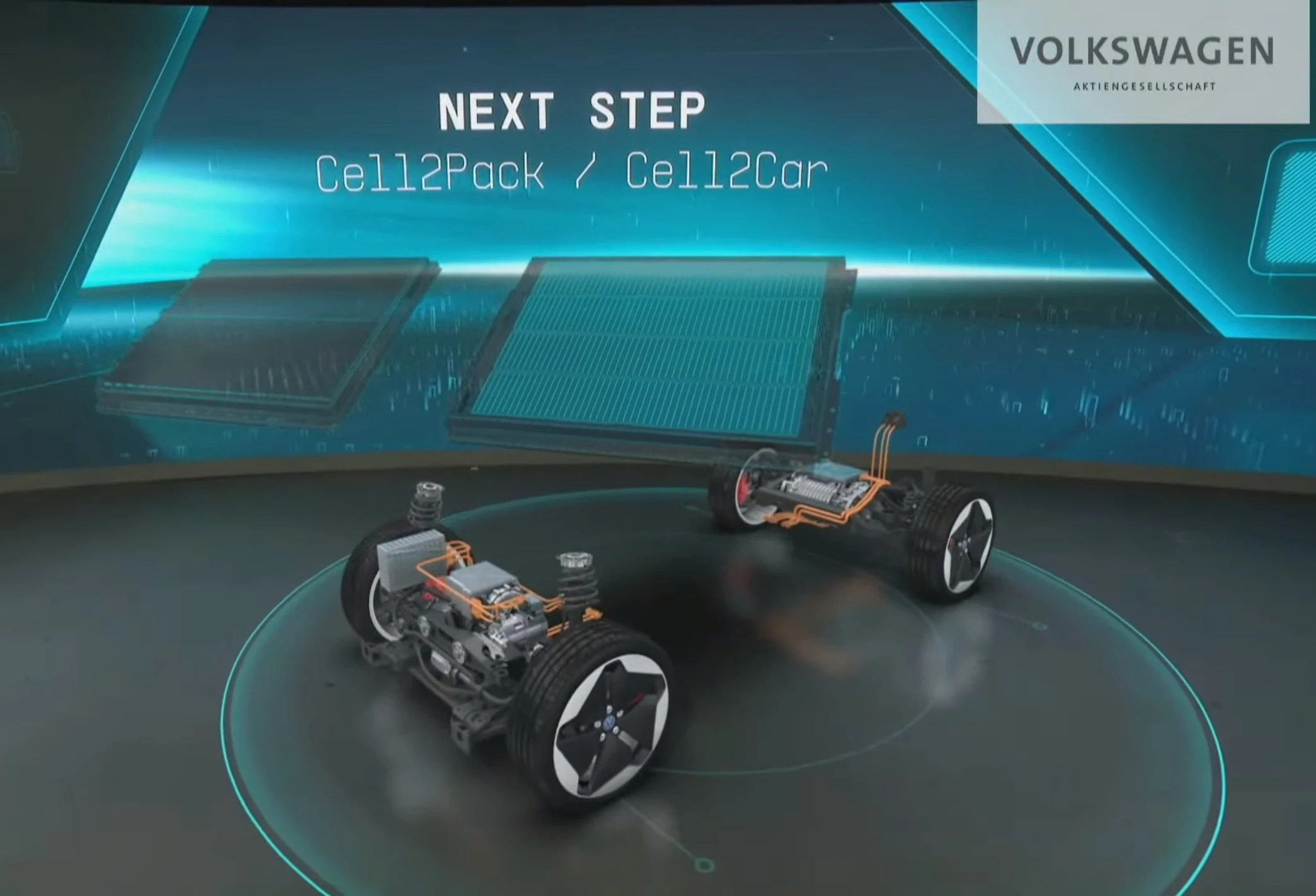
Volkswagen Cell2Pack technology
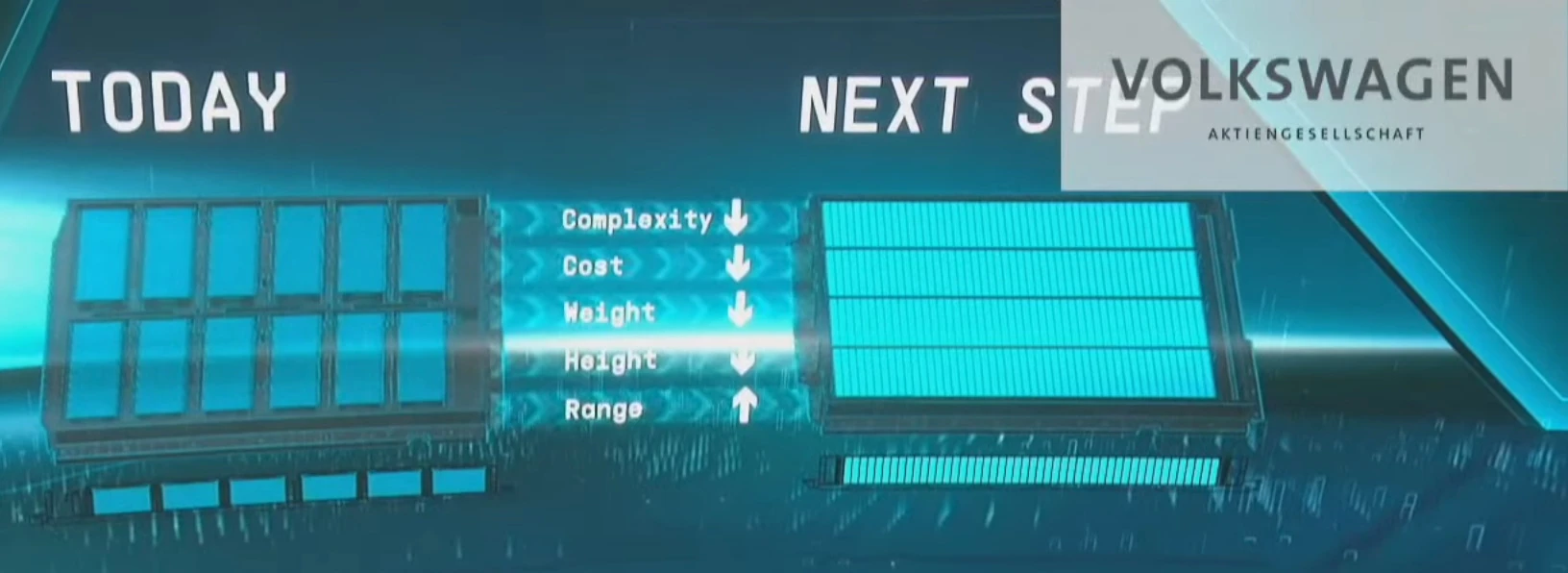
Volkswagen Cell2Pack comparison
See the complete presentation.